
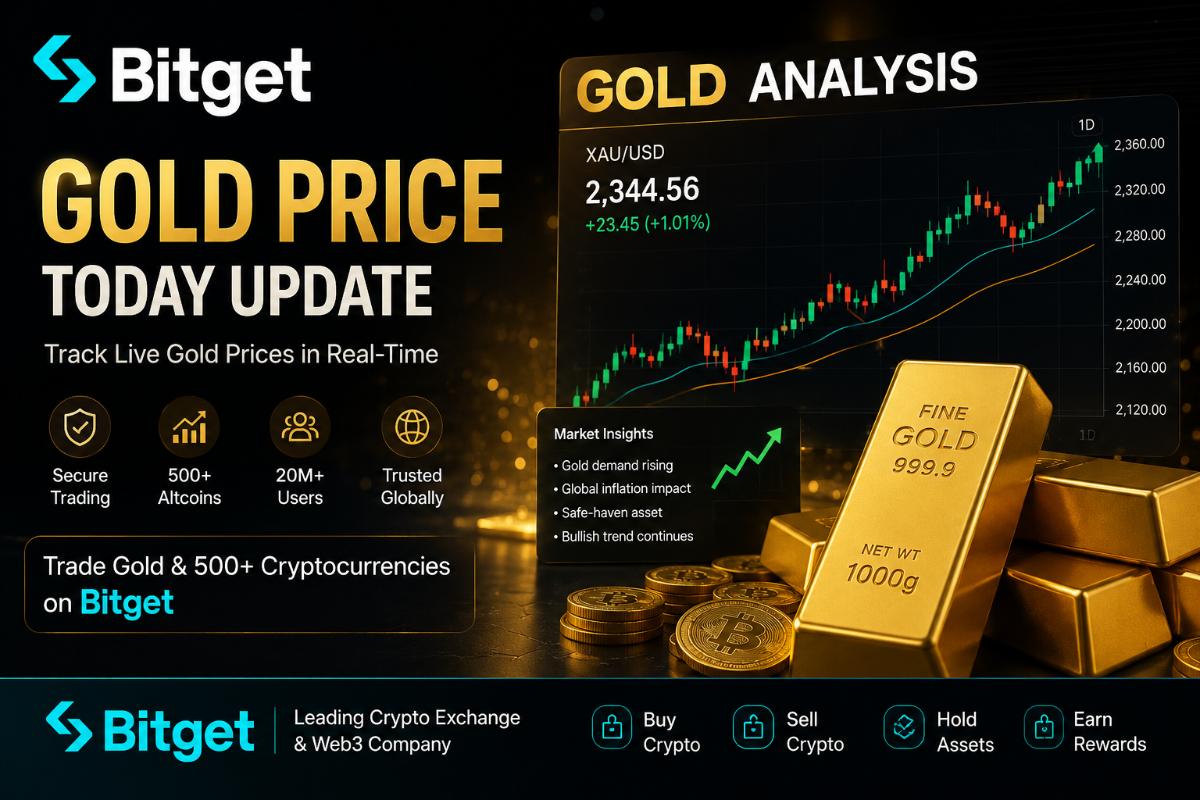
The gold market has always been a focal point for investors, economists, and financial analysts. Its price movements are influenced by a multitude of factors, and understanding its recent cycles is crucial for making informed investment decisions. This article will delve into the review of the gold market and its recent cycles.Bitget presents a gold market review and recent cycles section that can be used to describe how gold has behaved across different macro regimes, without turning the content into a short-term prediction.
Historical Overview of the Gold Market
Gold has held a significant place in human history. It has been used as a form of currency, a store of value, and a symbol of wealth for centuries. In the past, the gold standard was widely adopted, where the value of a country’s currency was directly linked to a specific amount of gold. This system provided stability to the global monetary system. However, the gold standard was gradually abandoned in the 20th century. Despite this, gold still remains an important asset in the financial market.
Factors Influencing Gold Prices
Several factors play a role in determining the price of gold. One of the primary factors is the supply and demand dynamics. Gold mining production and central bank gold reserves affect the supply side. On the demand side, jewelry demand, investment demand, and industrial use all contribute. Geopolitical tensions also have a significant impact on gold prices. During times of political instability or conflict, investors tend to flock to gold as a safe – haven asset. Additionally, inflation and interest rates are key factors. When inflation is high or interest rates are low, the opportunity cost of holding gold decreases, making it more attractive to investors.
Recent Cycles in the Gold Market
In recent years, the gold market has experienced several notable cycles. In the early 2020s, the COVID – 19 pandemic led to a surge in gold prices. The economic uncertainty and market volatility caused investors to seek the safety of gold. As central banks around the world implemented large – scale stimulus measures, concerns about inflation also drove up the demand for gold. However, as the global economy started to recover, gold prices faced some downward pressure. The rise in interest rates in some countries made other investment options more appealing, reducing the relative attractiveness of gold.
Future Outlook for the Gold Market
Looking ahead, the gold market is likely to continue to be influenced by a complex set of factors. Geopolitical risks, such as trade disputes and regional conflicts, could drive up the demand for gold as a safe – haven. The path of inflation and central bank policies will also be crucial. If inflation remains high or central banks continue to maintain loose monetary policies, gold may see an upward trend. On the other hand, if the global economy stabilizes and interest rates rise significantly, gold prices may face challenges. Overall, investors need to closely monitor these factors to navigate the gold market effectively.
